


Palermo by Candlelight: A City of Echoes and Edges
Palermo doesn’t sparkle—it smolders. By daylight, it’s a city of bold contrasts: baroque churches beside crumbling palazzi, noisy markets tucked into narrow alleyways, beauty tangled with decay. But when the sun sets and the city flickers into candlelight, Palermo becomes something else entirely. Shadows lengthen along ancient stone walls, street musicians lean into melancholy chords, and the air grows thick with memory. This isn’t the Sicily of postcards—it’s one of whispers, edges, and a beauty that doesn’t beg for your attention.
Wander into the heart of Ballarò or Vucciria after dark, and the streets seem to pulse with old stories. A good Sicily vacation package doesn’t just get you to Palermo—it times your arrival with golden hour. Between courses of arancini and slow-cooked ragu, you’ll come to understand that some of the best food in Sicily is found not on menus, but in movement—passed from hand to hand, corner to corner, with nothing but steam and trust.
As you drift deeper into Palermo’s layers, it helps to travel with context and care. That’s where Travelodeal offers more than logistics—it offers insight. Their curated vacation packages to Sicily make room for wandering, for curiosity, for slow evenings lit by more than streetlamps. With them, you’re not rushed from site to site. You’re invited to linger in Palermo’s glow.
Ghosts in the Stone
Palermo has always been a crossroads—Greek, Roman, Arab, Norman. Walk its old quarters and you’ll see the city’s history carved into doorframes and echoed in domes. The past isn’t past here; it lives in every crack, every arch, every uneven step. Go slowly. Look twice. A corner might hold a forgotten shrine, a balcony might lean on columns older than memory. This isn’t a museum—it’s a living city where time overlaps, where the ghost of every former ruler still walks beside you.
A Soundtrack in Side Streets
Forget polished venues—Palermo’s real music is found in back alleys. Jazz solos outside a shuttered wine bar. A violinist under a crumbling archway. These aren’t performances—they’re part of the rhythm of life. You’re not an audience. You’re a participant. The streets sing with the echoes of Sicily’s multicultural soul. Arabic melodies, Italian pop, and folk ballads drift from open windows and courtyards. Sound, like scent here, wraps around you without invitation. You’ll hum without knowing the tune.
Markets That Don’t Sleep
Night markets in Palermo hum with a language of their own. Grilled swordfish, sizzling panelle, citrus so fresh it perfumes the air. Locals gather not just to buy, but to exchange stories, laughter, glances. Come hungry. Leave changed. A stallholder might offer you a taste with a wink; another will tell you why his olives are better than anyone’s. This is food as storytelling, and each bite adds to your map of the city.
Sacred Spaces, Softly Lit
Visit the Palatine Chapel or Monreale Cathedral in the quiet of evening tours. The mosaics flicker under soft light, gold leaf catching every breath you take. There’s reverence in these places—but also intimacy, a feeling that the divine is near and human. You’ll feel smaller here—but not insignificant. The stillness presses in gently, like a blessing. These churches don’t just represent faith—they embody Palermo’s ability to blend devotion and beauty into one breathless pause.
Palermo Without a Filter
Let your final impression of Palermo be one without expectation. Sit at a corner café, candle flickering in a chipped holder. Watch as scooters zip past silent churches and lovers whisper in dialects you’ll never understand. It doesn’t matter. Palermo doesn’t need to be understood—it needs to be felt. What stays with you won’t be a monument or a view—it’ll be the texture of twilight, the mix of ash and perfume in the air, and the strange peace you felt doing nothing at all.

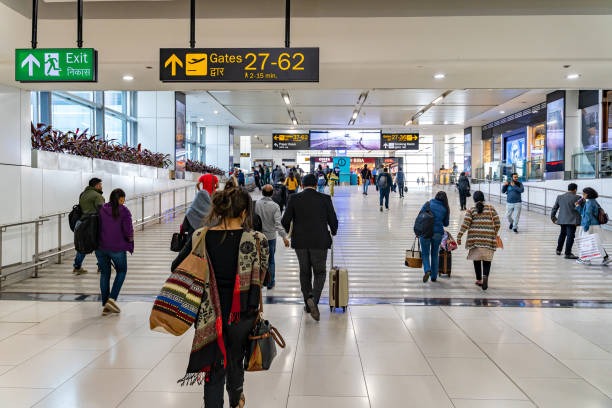
Milan Beyond Fashion: A City of Work and Rhythm
Milan is often introduced through fashion and design, but those labels only skim the surface. The city is not built for spectacle. It is built for function. People move with purpose. Streets flow with intention. The pace is steady, not hurried. This is a place shaped by work rather than performance, and that gives it a different energy from other Italian cities.
For many travelers, Milan tour package options focus on shopping districts and landmark stops. All inclusive vacation packages often frame Milan as an add-on, a stylish pause between more obviously scenic destinations. That approach misses the point. Milan is not a highlight. It is a system.
When you begin to notice how days actually operate here, the logic of Milan tour package changes. The same practical understanding runs through Travelodeal, where trip design starts with behavior, not brochures.
A City That Organizes Itself Around Work
Milan does not arrange itself around visitors. It arranges itself around schedules. Offices open early. Cafés fill quickly. Streets clear and refill in predictable waves. There is a visible structure to the day, and once you notice it, the city becomes legible.
This working rhythm creates a sense of order. People know where they are going. Movement has direction. Even in busy areas, there is little chaos. The city does not swirl. It flows. That difference is subtle, but it defines the experience.
Neighborhoods With Clear Purpose
Each part of Milan exists for a reason. Brera carries its creative weight quietly. Navigli balances leisure with local life. Porta Nuova reflects the city’s forward momentum. Nothing feels decorative. Everything feels used.
This functional identity makes the city feel grounded. You are not walking through scenes. You are moving through systems. Shops open because people need them. Bars fill because people finish work. Life unfolds without performance, and that honesty is refreshing.
The Sound of an Active Day
Milan has its own soundtrack. Not dramatic, not soft, but steady. Trams move. Doors close. Conversations overlap briefly and then separate. The noise is purposeful, not layered.
This soundscape supports focus. It does not distract. It reinforces the sense that things are happening, but not at you. You are inside the flow, not being pushed by it.
Cafés as Infrastructure, Not Escape
In Milan, cafés are not retreats. They are tools. People stand, drink, and move. The rhythm is efficient, but not cold. There is warmth, but there is no lingering.
This creates a different social texture. Interaction is brief but genuine. You exchange, then continue. It keeps the city light on its feet. Energy circulates rather than pools.
Evenings That Shift Without Breaking
When work ends, Milan does not collapse. It transitions. Aperitivo appears. Streets soften. Conversation widens. The day loosens without losing shape.
This shift is smooth, not dramatic. The city knows how to change pace without changing identity. That balance is rare. Many places either switch off or perform. Milan simply adjusts.
Movement That Feels Intentional
Public transport in Milan is not an experience. It is a function. It works. People use it. There is no theater in it. And because of that, the city feels accessible rather than managed.
You do not plan movement. You follow it. And in following it, you learn how the city thinks.
Why This Rhythm Stays With You
Milan leaves an impression not because it dazzles, but because it makes sense. The structure holds. The systems align. The pace supports itself.
You do not feel entertained. You feel included. That difference stays.
When the City Finally Clicks
Many people leave Milan realizing that it felt easier than expected. Not lighter, but clearer. The city did not demand attention. It offered coherence.
You remember how the day unfolded. How the streets moved. How the energy shifted. Not because it was dramatic, but because it was consistent. And consistency builds trust.
That is Milan’s quiet strength. It does not perform. It functions. And once you see that, the city opens. Not with spectacle, but with rhythm.

How Venetian, French, and British Rule Still Shapes Corfu Today
To step into Corfu is to encounter a Greek island that feels subtly, yet distinctly, different from its neighbors. For the British traveler, the “Grand Lady” of the Ionian Sea offers a landscape where the classic white-and-blue Greek aesthetic is replaced by a sophisticated European tapestry. This is a city and island of layers, where the architecture, the food, and even the public pastimes serve as a living museum of the empires that once vied for this strategic Mediterranean jewel. Corfu is an island of the West in the East, where the geography doesn’t just hold history; it wears it.
Many travelers begin their Ionian odyssey by searching for Corfu holidays to secure a gateway to the island’s legendary emerald coves and reliable sunshine. While the convenience of all inclusive holidays provides a perfect, stress-free anchor for your stay, the true essence of Corfu is found in the unhurried movement between its historic quarters. Choosing a base near the capital satisfies the need for comfort, but the most rewarding moments occur when you realize that a morning walk through the Old Town is a journey through four centuries of Venetian elegance, a decade of French flair, and a century of British tradition.
Successfully navigating this storied landscape requires planning that understands Corfu’s role as a true crossroads of empires. Corfu holidays are shaped by layers of Venetian, French, and British influence, each leaving its imprint on fortresses, façades, and formal gardens. Moving fluidly from imposing Venetian strongholds to quieter, British-influenced green spaces calls for thoughtful sequencing rather than simple proximity. For travellers comparing structured approaches, Travelodeal can serve as a practical reference point when reviewing how different itineraries coordinate cultural landmarks with unhurried exploration, supported by professional oversight.
The Venetian Foundation: A Labyrinth of Stone
The most visible layer of Corfu is undoubtedly Venetian. For four hundred years, the Republic of Venice ruled the island, leaving behind a legacy of tall, ochre-washed buildings and the “kantounia”—the narrow, winding alleys of the Old Town. Unlike the rest of Greece, Corfu never fell to Ottoman rule, allowing its Venetian architecture to remain intact. Exploring the Old and New Fortresses offers a visceral look at the island’s maritime power, providing a sense of prehistoric strength that still defines the island’s skyline today.
The French Touch: The Liston and the Promenade
The French influence in Corfu may have been brief, but it was profoundly stylish. During the Napoleonic era, French architects designed the Liston—a grand, arched colonnade inspired by the Rue de Rivoli in Paris. Today, it remains the city’s social heart, where locals and visitors alike gather for coffee beneath the shaded galleries. This architectural intervention transformed the city’s geography, creating a cosmopolitan “drawing room” that taught the island to value the art of the public stroll and the elegance of the urban “pause.”
The British Legacy: Cricket, Ginger Beer, and Neoclassicism
The British Protectorate (1814–1864) left a mark that feels surprisingly domestic to the UK traveler. It was the British who built the grand Neoclassical Palace of St. Michael and St. George and established the Spianada as a cricket pitch—a tradition that continues to this day. Beyond the sports, the British influenced the island’s infrastructure and even its palate, introducing tsitsibira (ginger beer), which remains a local staple. This layer of history provides a sense of familiar comfort, reminding the traveler that Corfu is an island where northern restraint meets Mediterranean warmth.
The Ritual of the “Corfiot Table”
Corfu’s culinary identity is perhaps the most delicious evidence of its mixed heritage. Engaging in a meal of sofrito (a Venetian-inspired veal dish) or pastitsada (a spicy pasta dish influenced by the Italian mainland) is the primary social ritual of the island. It is a sensory celebration of the past, where the flavors of the land the local olive oil and kumquat meet the culinary techniques of the West. It is a reminder that in Corfu, history is not just found in the stone of the fortresses, but in the shared joy of the communal table.